
Most of us do not need another complicated skincare routine. Five quiet minutes, clean hands, and a moisturizer your skin already likes are enough for this one.
Keep the pressure lighter than you think. Your fingers should glide without pulling, and the massage should feel soothing rather than impressive. The goal is not to sculpt your face or promise a permanent lift. It is simply a gentle way to slow down and relax a tight-feeling brow, temples, or jaw.
The quick answer
To massage your face at home, start with clean hands and apply enough of a familiar moisturizer or facial oil for your fingers to glide. Use light, slow movements across your forehead, temples, cheeks, jaw, the bone around your eyes, and the sides or back of your neck for about five minutes. Nothing should hurt, pull, or make you feel pressure on your eyes or teeth.
| Beginner starting point | |
|---|---|
| Time | About five minutes |
| Pressure | Light and comfortable |
| Tools | Clean hands |
| Frequency | Start two or three times a week |
| Stop if | You feel pain, burning, numbness, dizziness, or increased irritation |
This is a general relaxation-focused facial massage. It is different from a facial lymphatic drainage routine, which uses much lighter, directional strokes for temporary puffiness. If puffiness is your main concern, follow that routine instead.
What facial massage can and cannot do
A short facial massage may temporarily increase local blood flow and can feel relaxing. The evidence is still limited, though. One small study found an increase in cheek blood flow after five minutes with a facial roller, but that result came from a tool-based massage on one area of the face, not this complete hands-only routine. A recent systematic review also found that research on lasting cosmetic changes from mechanical facial techniques remains too limited and inconsistent for confident conclusions.
That means it is reasonable to use facial massage as a comfortable ritual, but not to expect it to permanently lift your face, erase wrinkles, or change your facial structure. A temporary flushed, relaxed, or less puffy appearance is different from a lasting anatomical change.
What you need
- Clean hands with short, smooth nails.
- A moisturizer or light facial oil your skin already tolerates.
- Five uninterrupted minutes, if possible.
You do not need a special tool. Tapping or holding a point gently can be done without product, but sweeping movements need enough slip that your fingertips do not drag. If your skin is acne-prone, choose a familiar non-comedogenic product rather than experimenting with a new oil during the massage.
If you massage in the morning, do it before sunscreen. Massage can disturb an applied sunscreen layer, so reapply sunscreen afterward if needed.
Before you start
- Wash your hands and cleanse your face gently.
- Apply a thin, even layer of moisturizer or oil.
- Drop your shoulders and let your teeth separate slightly.
- Test one stroke on your cheek. Your skin may move a little, but it should not stretch, sting, or turn pale under your fingers.
When to skip facial massage: Do not massage broken, infected, sunburned, or severely irritated skin. Avoid inflamed or painful acne and skip massage during a rosacea flare. Follow your clinician's aftercare instructions after fillers, Botox, peels, laser treatment, or facial surgery. Persistent or unexplained swelling needs medical assessment rather than a beauty routine. Read Is Facial Massage Safe? for more detail.
The five-minute routine
Move slowly enough that each pass takes a full breath. Think of spreading moisturizer, not working out a knot.
1. Forehead
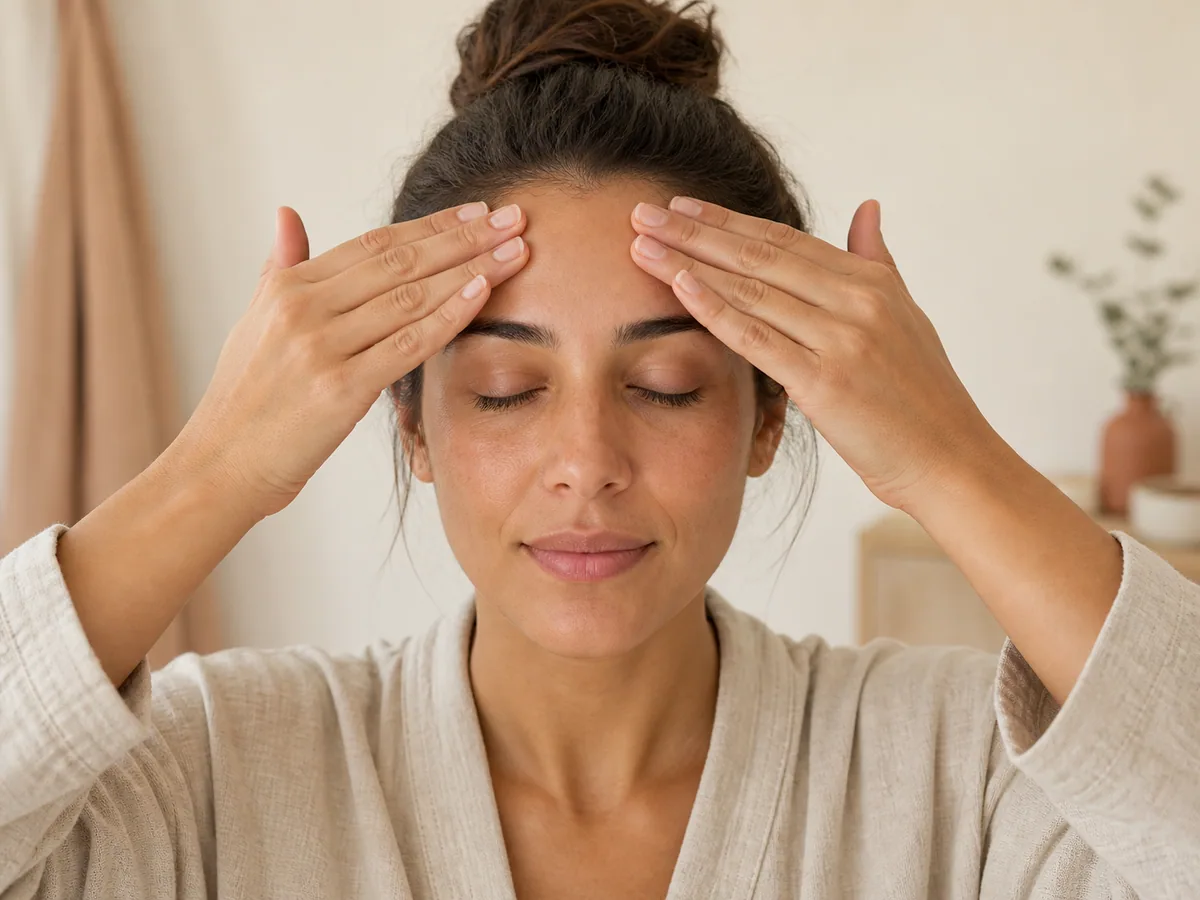
Place the flat pads of your fingers near the center of your forehead. Glide outward toward your temples, then lift your hands and return to the center. Repeat five or six times.
Pressure cue: Your fingertips should stay broad and soft. If your eyebrows or scalp are being pulled along, add more slip or use less pressure.
2. Temples
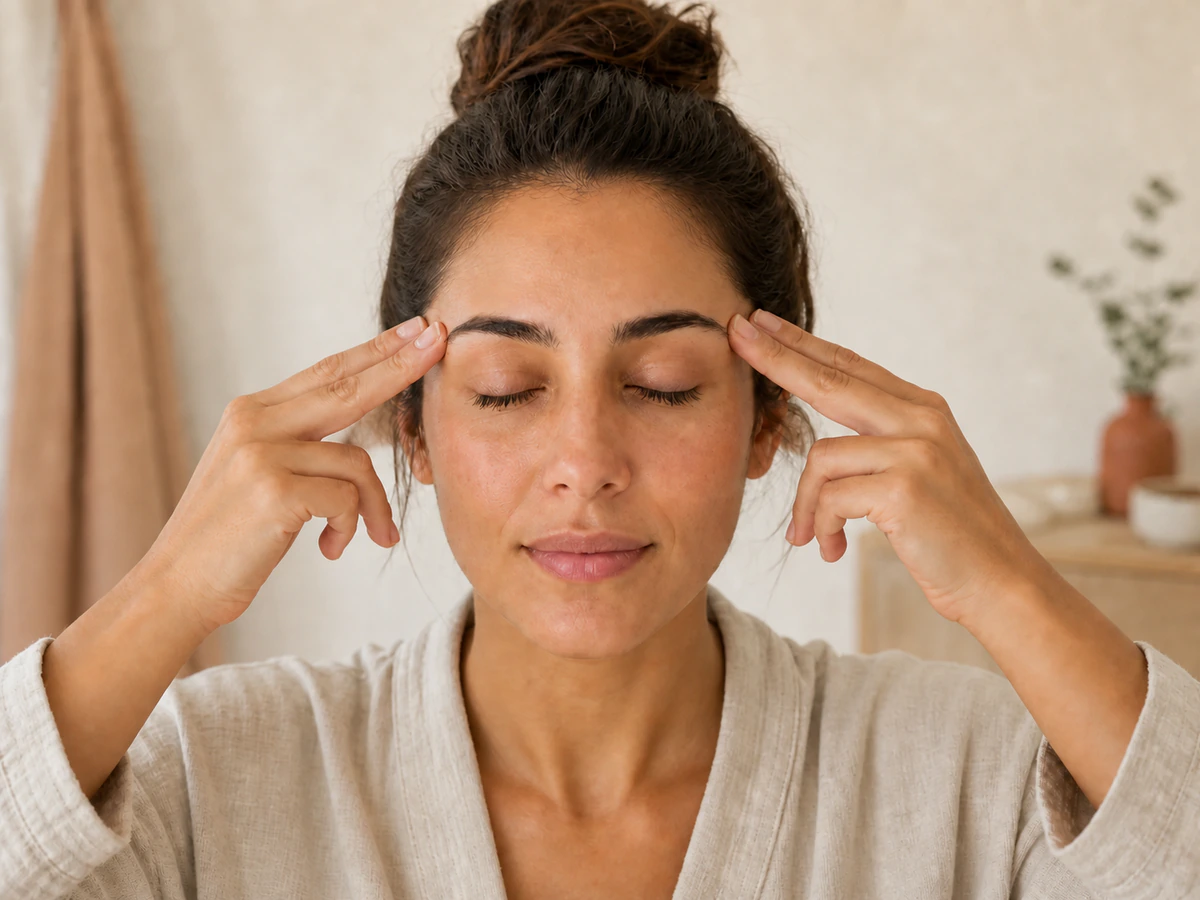
Rest one or two fingertip pads on each temple and make slow circles for 20 to 30 seconds. Keep your jaw loose and your shoulders down.
Pressure cue: Imagine polishing a coin rather than kneading dough. Stop if the movement increases a headache or feels sharp.
3. Cheeks
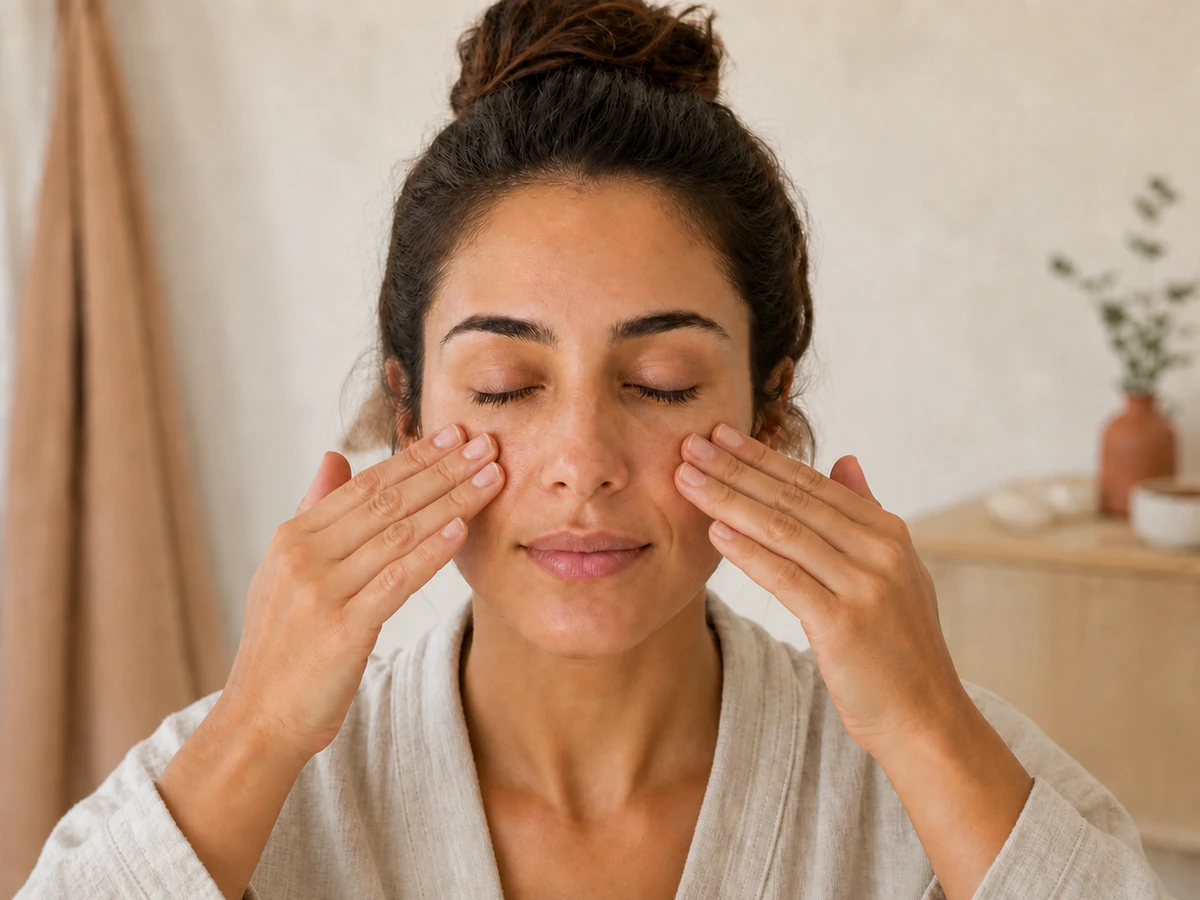
Place your fingertip pads beside your nose and glide outward across your cheeks toward your ears. Lift, return to the starting point, and repeat five or six times. Use fingertips rather than knuckles while you are learning the pressure.
Pressure cue: The motion should feel smooth and comfortable. Work around inflamed blemishes instead of rubbing over them.
4. Jaw
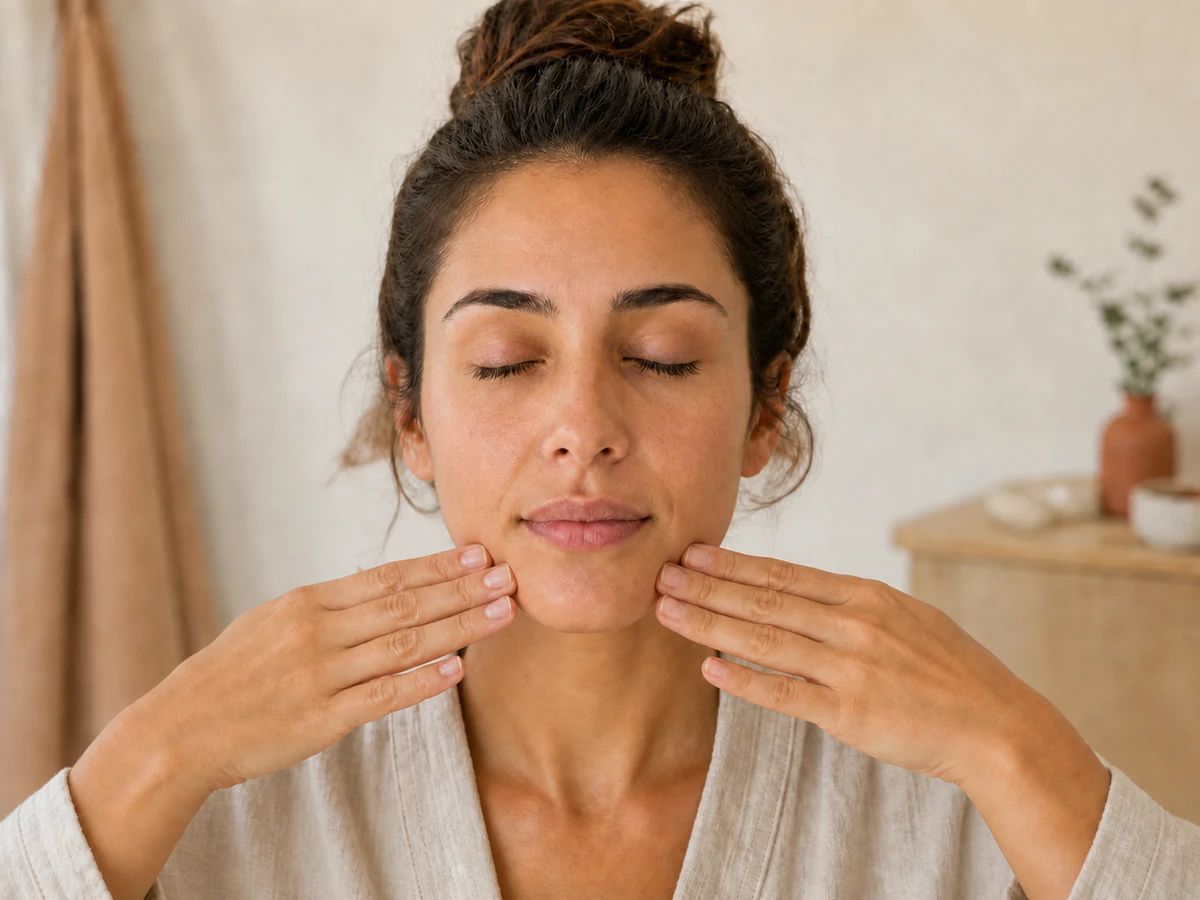
Let your teeth separate. Place your fingertips under the center of your chin and glide outward along the lower jaw toward its angle. Stop before the jaw joint directly in front of your ear. Repeat five or six times.
Pressure cue: You should not feel pressure in your teeth. Facial massage may feel relaxing around a tight jaw, but persistent pain, locking, or limited movement deserves assessment from a dentist or healthcare professional.
5. Around the eyes
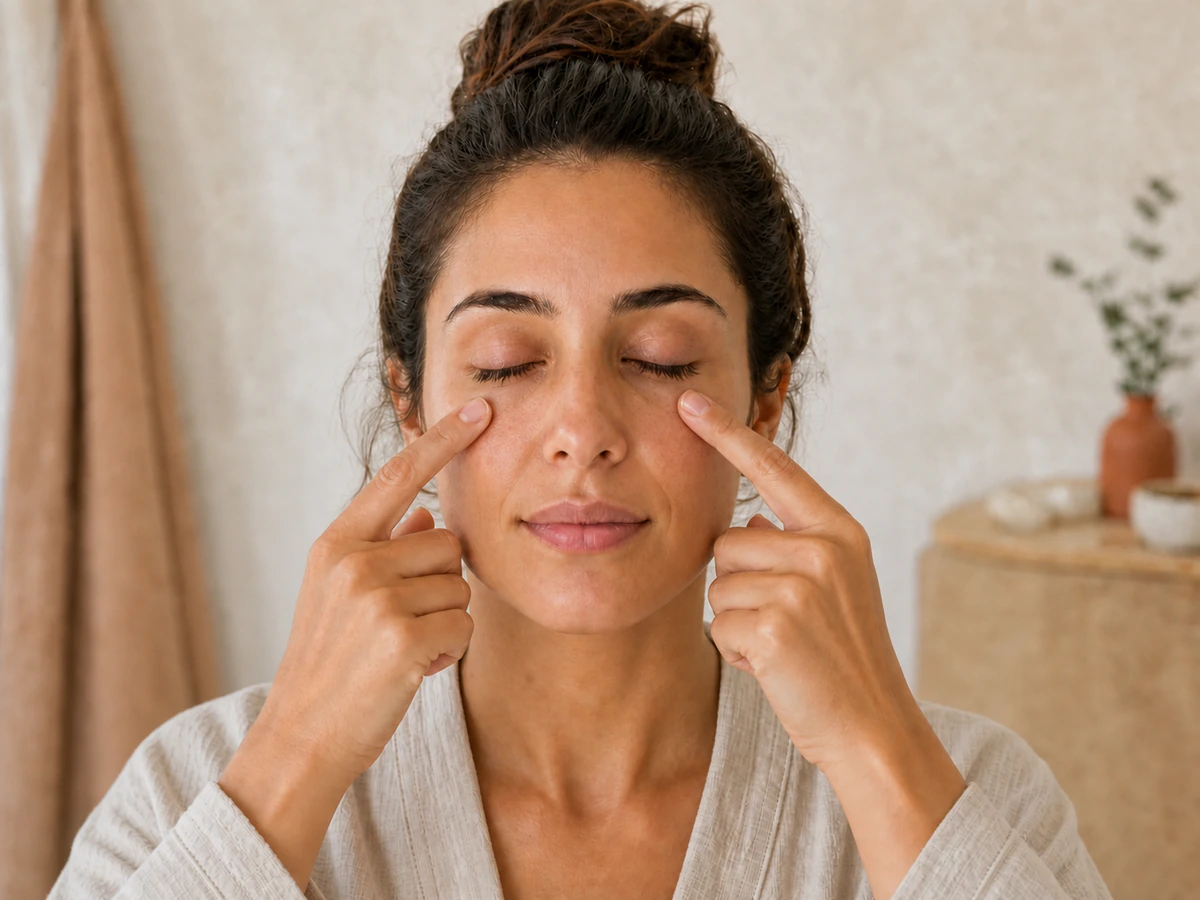
Use one fingertip on each side and touch only the bony rim below the eye. Starting near the inner half of the under-eye area, sweep outward toward the temple with feather-light pressure. Repeat three or four times, or skip this step if the area is sensitive.
Pressure cue: Never press on the eyeball or movable eyelid. There should be no indentation, pulling, or stretching of the under-eye skin.
6. Neck

Place your open hands on the outer sides of your neck, slightly behind the line of your ears. Glide lightly down toward the tops of your shoulders three or four times. Keep your chin level and breathe normally.
Pressure cue: Stay away from the front of the throat and do not squeeze or use deep pressure on the neck. This is a light relaxation finish, not deep tissue work or a lymphatic treatment.
That is one complete pass. If your skin still feels comfortable and you want more time, repeat the forehead, temples, cheeks, and jaw once. More pressure is not more effective.
Common mistakes
- Using too much pressure. Pain, skin blanching, or pressure in your teeth means you need to ease off.
- Gliding without enough slip. Add a little more of a product your skin already tolerates rather than pulling at dry skin.
- Pressing around the eyes. Stay on the bony rim and keep the contact feather-light.
- Treating swelling as a cosmetic problem. New, one-sided, painful, or persistent swelling should be assessed.
- Rushing through the sequence. Slow, comfortable movements are easier to control than fast repetitions.
- Expecting a permanent lift. Facial massage is a relaxation ritual, not a substitute for medical or cosmetic treatment.
How often should you massage your face?
There is no established ideal frequency. Start with three to five minutes, two or three times a week. If your skin remains calm and comfortable, you can do it more often. Reduce the pressure, shorten the routine, or take a break if you notice redness that lingers, tenderness, dryness, or breakouts.
Frequently asked questions
Can I massage my face every day?
Daily massage may be comfortable for some people, but it is not necessary. Start two or three times a week and increase only if your skin remains calm. More is not automatically better.
Do I need facial oil?
No special oil is required. Use enough of a moisturizer or facial oil you already tolerate to prevent drag during sweeping strokes. Avoid introducing a strongly fragranced or unfamiliar product just for the massage.
Can facial massage lift my face or remove wrinkles?
There is not strong evidence that facial massage produces a permanent lift, removes wrinkles, or changes facial structure. Any more defined appearance immediately afterward is likely temporary.
Can facial massage help a sore jaw?
Gentle contact may feel relaxing around a tight-feeling jaw, but this routine is not a treatment for temporomandibular disorders. Stop if massage increases pain. Seek professional advice for persistent pain, clicking with pain, locking, or reduced jaw movement.
Evidence and sources
- A small study of a facial massage roller and temporary cheek blood flow: PubMed
- A systematic review of conservative mechanical facial techniques and the limits of current evidence: PubMed Central
- Dermatologist guidance to avoid rubbing, scrubbing, or massaging rosacea-affected skin: American Academy of Dermatology
Next steps
If this routine feels natural and temporary puffiness is your main concern, try the facial lymphatic drainage routine. It uses a different pressure and sequence. For a fuller explanation of benefits and limitations, read What Is Facial Massage?.
Prefer to learn with a guide instead of checking each step on a screen? MyFaceRitual is being built to teach the complete routine at a calm, follow-along pace. Join the waitlist.