Gentle, hands-only facial massage is generally low-risk on healthy, intact skin. Skip it over infected, sunburned, broken, or actively inflamed skin. Avoid massaging skin affected by rosacea, and follow your own clinician's instructions after injections, surgery, or another facial procedure.
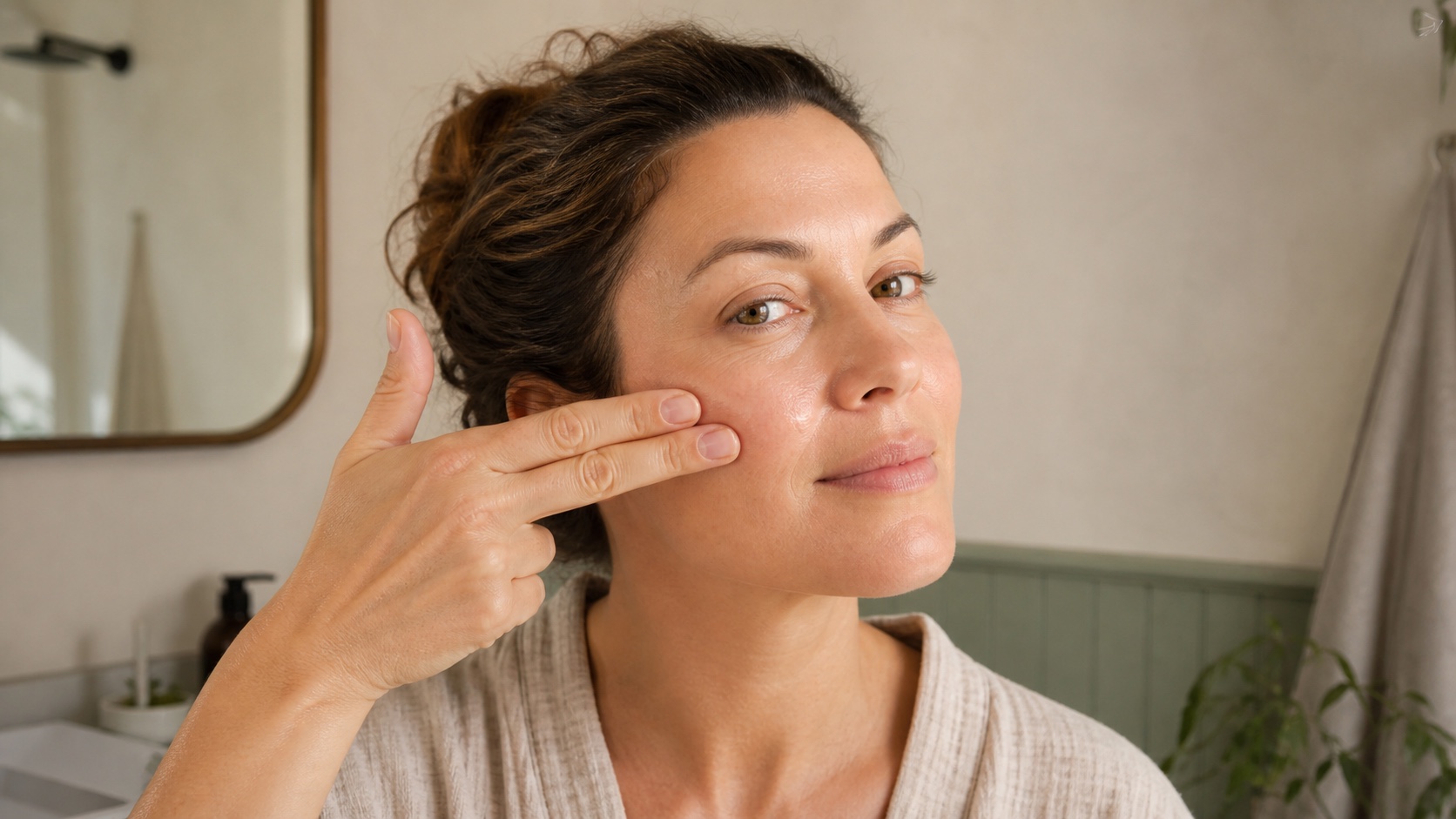
Short answer: Stop if massage causes pain, bruising, burning, marked swelling, or symptoms that persist or worsen. A massage should leave your face feeling comfortable, not as if you have pushed through a treatment.
This guide is about gentle self-massage with clean hands. It is not advice for vigorous spa facials, massage guns, suction devices, or post-surgical manual lymphatic drainage prescribed by a clinician.
Can I massage my face today?
Use this quick check before you begin.
| What is happening today? | What to do | Why |
|---|---|---|
| Your skin is calm, intact, and comfortable | A short, gentle session is usually reasonable. | The overall risk of harm from gentle massage appears low. |
| Your skin is sensitive, you bruise easily, or you have a diagnosed skin or lymphatic condition | Modify the routine or ask your healthcare professional first. | Pressure, products, and technique may need to be individualized. |
| You have sunburn, an open wound, an active infection, an eczema flare, inflamed acne, or rosacea-affected skin | Skip the affected area. | Friction and pressure can worsen irritation or inflammation. |
| You recently had Botox, filler, threads, laser treatment, a peel, microneedling, or facial surgery | Follow the instructions from the clinician who treated you. | Aftercare varies by procedure, product, area, and healing stage. |
| Swelling is new, unexplained, painful, or mainly on one side | Seek medical advice instead of repeatedly massaging it. | Facial swelling can have causes that a cosmetic routine cannot address. |
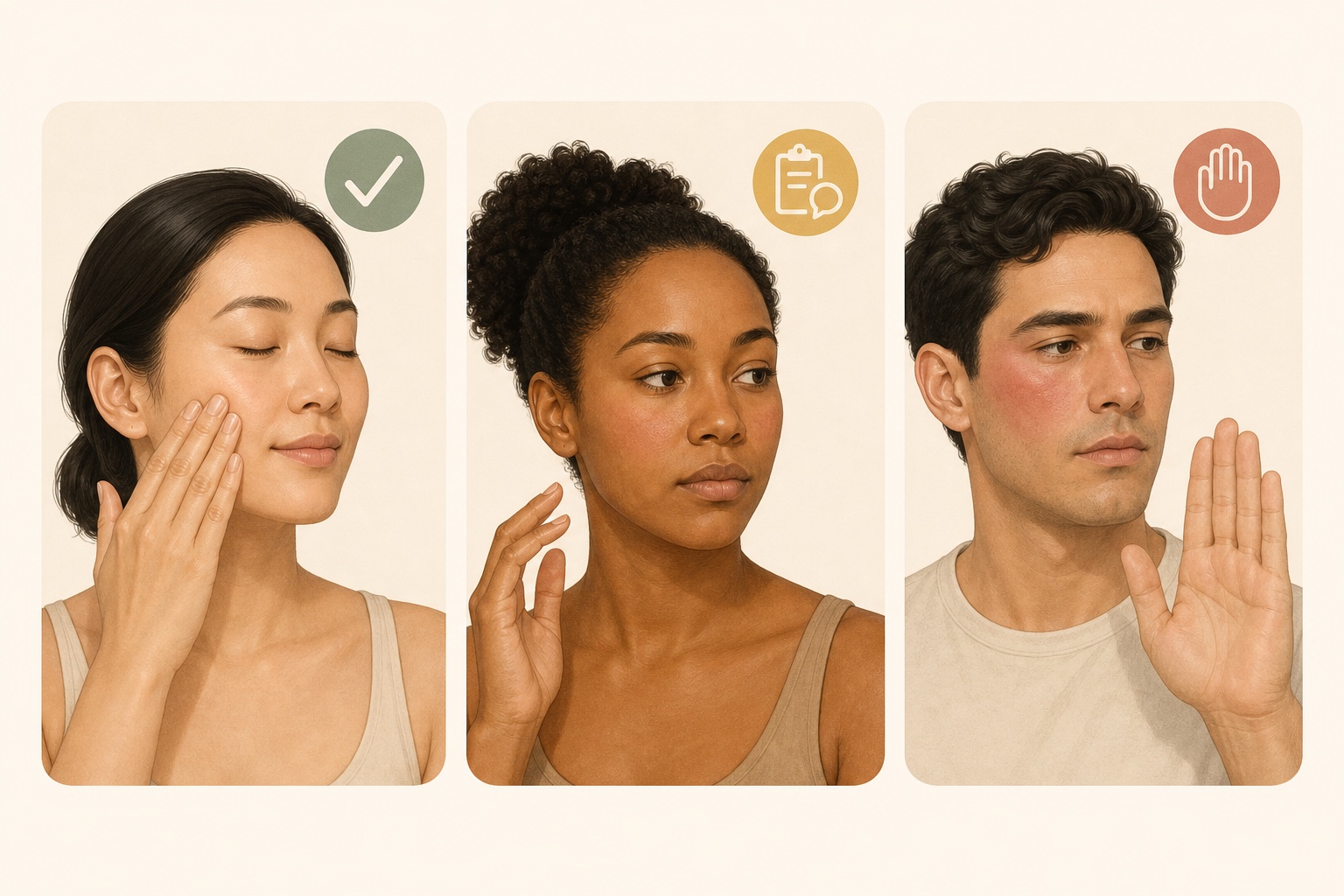
A calm face may be suitable for gentle massage. Sensitive or medically complex situations need modification. Inflamed, injured, or recently treated skin needs a pause.
What side effects can facial massage cause?
Most problems come from too much pressure, too much friction, or a product that the skin does not tolerate.
- Temporary warmth or a mild color change: This can happen after massage, but it should not feel hot, painful, itchy, or increasingly uncomfortable.
- Irritation: Stinging, burning, rawness, or lasting tenderness means the pressure, friction, product, or frequency is not working for your skin.
- Breakouts: Repeated touching, rubbing, a dirty tool, or an oily or comedogenic product may aggravate acne-prone skin. The American Academy of Dermatology recommends gentle skin care, minimal touching, and non-comedogenic products for acne-prone skin. Read the AAD acne guidance.
- Bruising: Bruising is a reason to stop, not a sign that the massage reached a deeper or more effective layer.
- Product reaction: Fragrance, essential oils, or an unfamiliar facial oil can cause irritation or contact dermatitis. Use a moisturizer or oil your skin already tolerates.
Facial-specific safety research is limited. One observational study of salon facial treatments reported redness, swelling, dermatitis, and acne-like eruptions. Those treatments also involved vigorous massage, creams, steam, masks, and sometimes extractions, so the results cannot be attributed to gentle home massage alone. Read the study on PubMed.
Is facial massage safe with acne, rosacea, or eczema?
Acne
Do not press, knead, or drag over inflamed, painful, or cystic spots. Friction and repeated touching can worsen irritation, and squeezing increases the risk of marks and scarring. If the rest of your skin is calm, you can either work around the breakout or wait until it settles.
Choose a non-comedogenic moisturizer if you need glide. More oil is not automatically safer. It can simply add another variable when your skin is already reactive.
Rosacea
Avoid massaging skin affected by rosacea unless your dermatologist has specifically advised it. The American Academy of Dermatology recommends avoiding rubbing, scrubbing, and massaging rosacea-prone skin because irritation can trigger a flare. Read the AAD rosacea skin-care guidance.
Eczema and very sensitive skin
Skip areas that are inflamed, cracked, weeping, infected, painful, or intensely itchy. On calm skin, use only a familiar fragrance-free product and minimal pressure. Stop at the first sign of burning or increased itching.
What about Botox, fillers, peels, and facial surgery?
There is no universal waiting period that is correct for every procedure. Some fillers are deliberately massaged by a clinician, while others come with different aftercare. Surgery, threads, laser treatment, chemical peels, and microneedling each have their own healing timelines.
Use the instructions from the professional who performed your procedure. If those instructions are unclear, ask before restarting massage. Do not use a general blog schedule to override individualized aftercare.
Who should check with a healthcare professional first?
Ask for individualized guidance if you:
- Take blood thinners, have a bleeding disorder, or bruise very easily
- Have lymphedema or another diagnosed lymphatic condition
- Have a current infection, fever, or unexplained swelling
- Have a high-risk pregnancy or another medical condition that changes what kinds of massage are appropriate
- Are recovering from cancer treatment, radiation, an injury, or surgery involving the face or neck
General massage is considered relatively low-risk, but the National Center for Complementary and Integrative Health notes that rare serious adverse events have been reported, particularly with vigorous techniques or in people at higher risk of injury. Read the NCCIH massage safety overview.
Lymphatic drainage has its own precautions. It is not simply ordinary facial massage performed in an outward direction. If you have lymphedema, heart or kidney disease, a blood clot, cellulitis, fever, or another infection, get professional advice before trying to move fluid yourself. See Cleveland Clinic's lymphatic drainage precautions.
When should you stop and seek care?
Stop the massage and seek medical advice if you notice:
- New or unexplained facial swelling, especially on one side
- Swelling with fever, warmth, significant pain, or spreading redness
- A new lump or lymph nodes that remain enlarged
- Facial weakness, numbness, a severe headache, or vision changes
- Hives, swelling of the lips or tongue, or difficulty breathing after using a product
Call emergency services for difficulty breathing, sudden facial weakness, or other severe or rapidly developing symptoms. Massage should never be used to delay assessment of a medical problem.
How much pressure is safe?
The right pressure depends on what you are trying to do.
- General relaxation massage: Use comfortable, controlled pressure over soft tissue. You should not feel pressure on your teeth, pain in the jaw joint, or sharp tenderness.
- Lymphatic-style massage: Use much lighter pressure because the superficial lymphatic vessels sit close to the skin. Pressing harder is not more effective.
- Around the eyes: Stay on the bony eye socket and use minimal pressure. Never press on the eyeball.
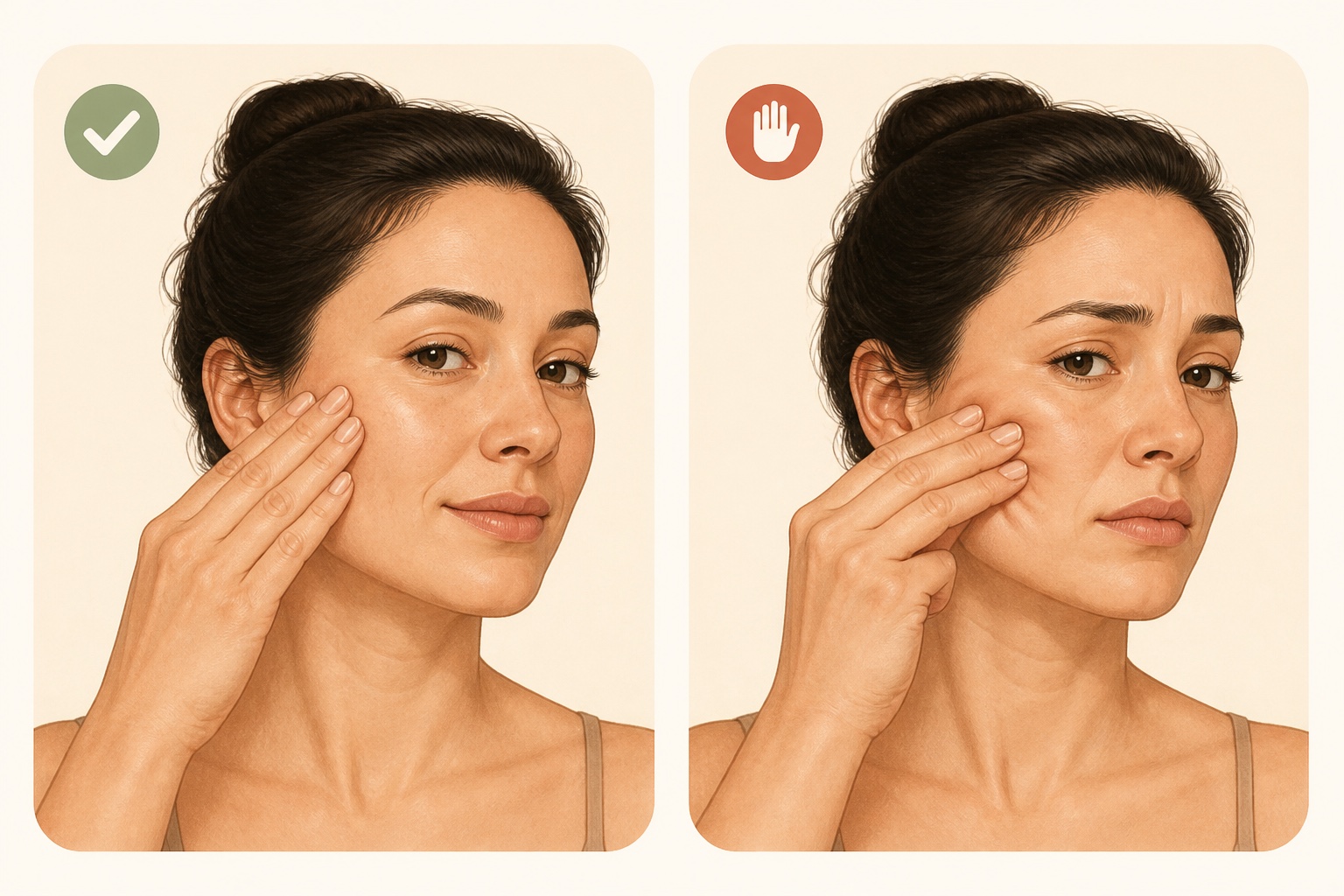
Flat finger pads and a relaxed hand help control pressure. If your fingertips dig in, your skin bunches sharply, or your teeth feel the pressure, back off.
Can facial massage cause wrinkles?
There is no good evidence that gentle facial massage causes wrinkles. There also is not enough long-term research to promise that every technique is harmless.
Avoid forceful pulling and repeated friction because they can irritate the skin. Use enough moisturizer or oil for your fingers to move comfortably, but choose a product your skin already tolerates. The sensible goal is comfortable movement, not stretching the skin as far as it will go.
How often is facial massage safe?
There is no well-established, evidence-based schedule for cosmetic facial massage. A practical starting point is a three-to-five-minute session two or three times a week. Increase only if your skin remains calm and the massage still feels comfortable.
Daily massage may suit some people, but more is not automatically better. Reduce the pressure, shorten the session, or take a break if you notice tenderness, breakouts, burning, or irritation.
A safer facial massage checklist
Before each session:
- Check that your skin is intact, calm, and not unusually hot, painful, or swollen.
- Wash your hands and clean any reusable tool.
- Remove rings or anything that could scratch your skin.
- Use a familiar moisturizer or light oil if your fingers drag.
- Keep the pressure comfortable and the movements controlled.
- Stop when the skin asks you to stop. Pain and bruising are not progress.
If you are ready to begin, follow the five-minute hands-only facial massage routine. For puffiness, read the facial lymphatic drainage guide first because the pressure, direction, and precautions are different.
Facial massage safety FAQ
Is facial massage safe?
Gentle, hands-only facial massage is generally low-risk on healthy, intact skin. Skip infected, sunburned, broken, or actively inflamed areas, and follow your clinician's instructions after facial procedures.
Can facial massage cause wrinkles?
There is no good evidence that gentle facial massage causes wrinkles. Avoid forceful pulling and repeated friction because they can irritate the skin, even though their effect on long-term skin laxity has not been established.
How often should you do facial massage?
There is no established ideal frequency. A practical starting point is three to five minutes, two or three times a week, increasing only if your skin remains calm and comfortable.
Is facial massage safe with acne or rosacea?
Do not massage inflamed, painful, or cystic acne. Avoid massaging rosacea-affected skin unless your dermatologist has specifically advised it, because friction can trigger irritation or a flare.
Can I massage my face after Botox or fillers?
Follow the instructions from the clinician who performed the procedure. Aftercare varies by product, treatment area, and healing stage, so there is no universal waiting period that is right for everyone.
Next steps
For the broader evidence on benefits and limitations, read What Is Facial Massage?. If you prefer a guided routine instead of piecing together separate instructions, you can also join the MyFaceRitual waitlist.
This article provides general education and is not a diagnosis or a substitute for care from a qualified health professional.